




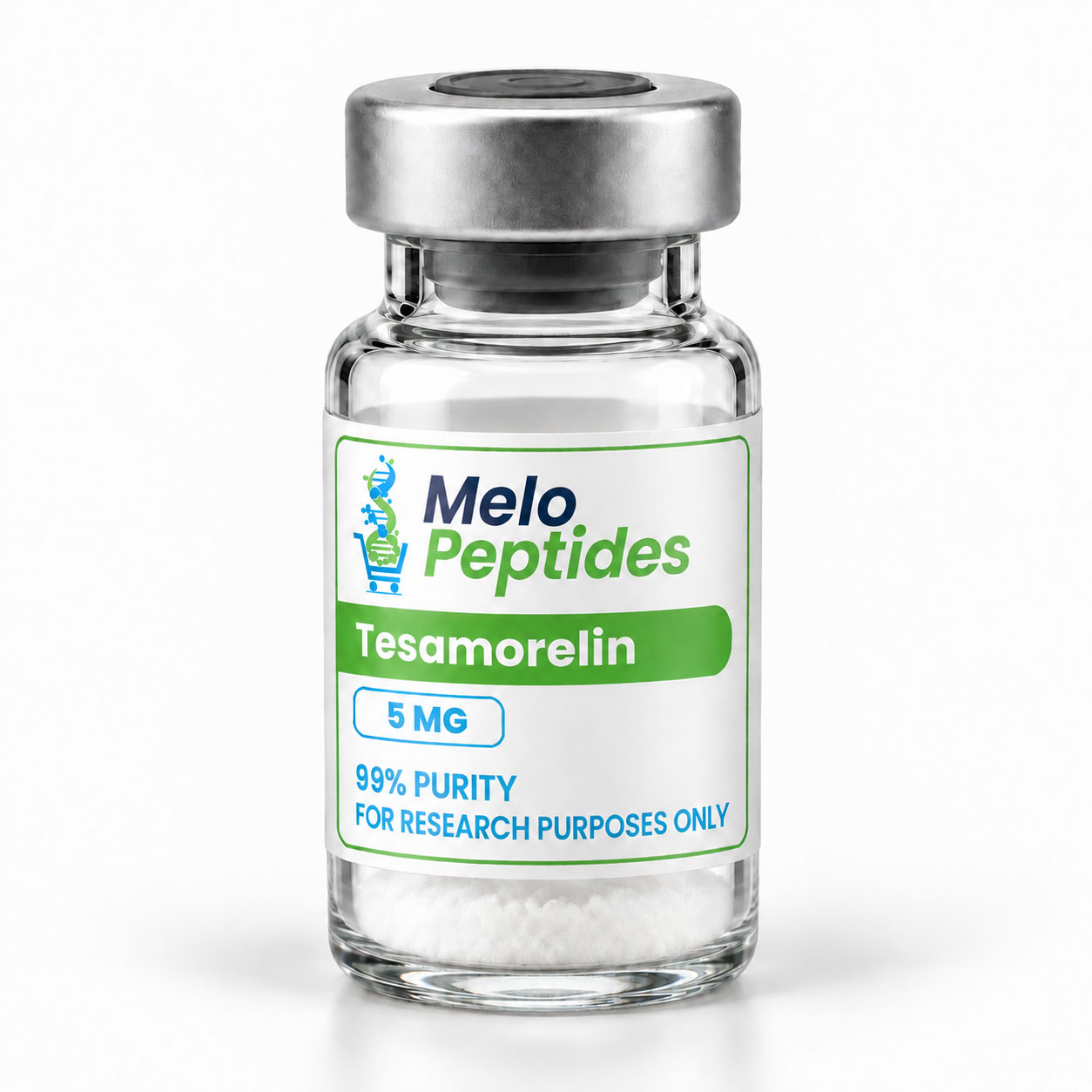
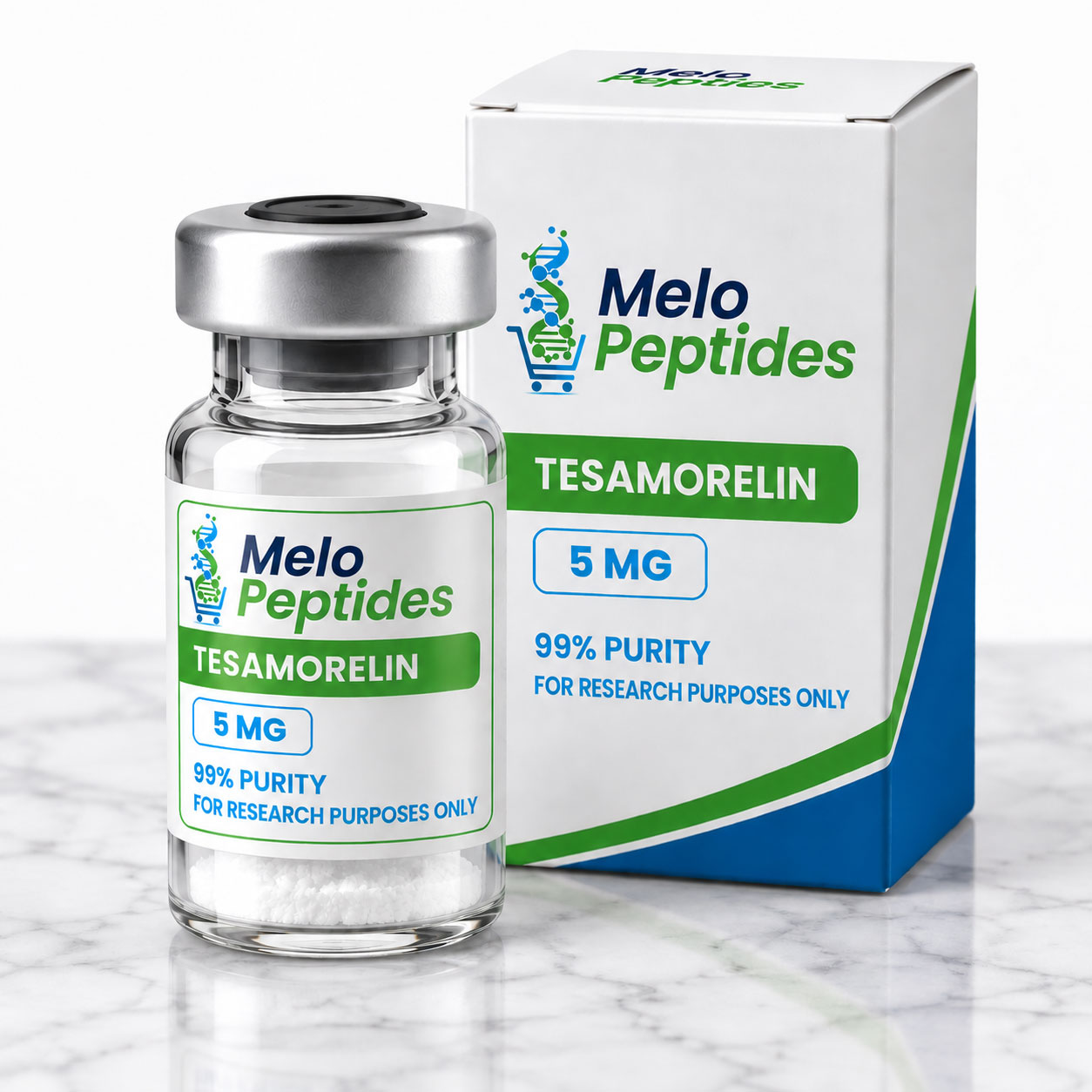



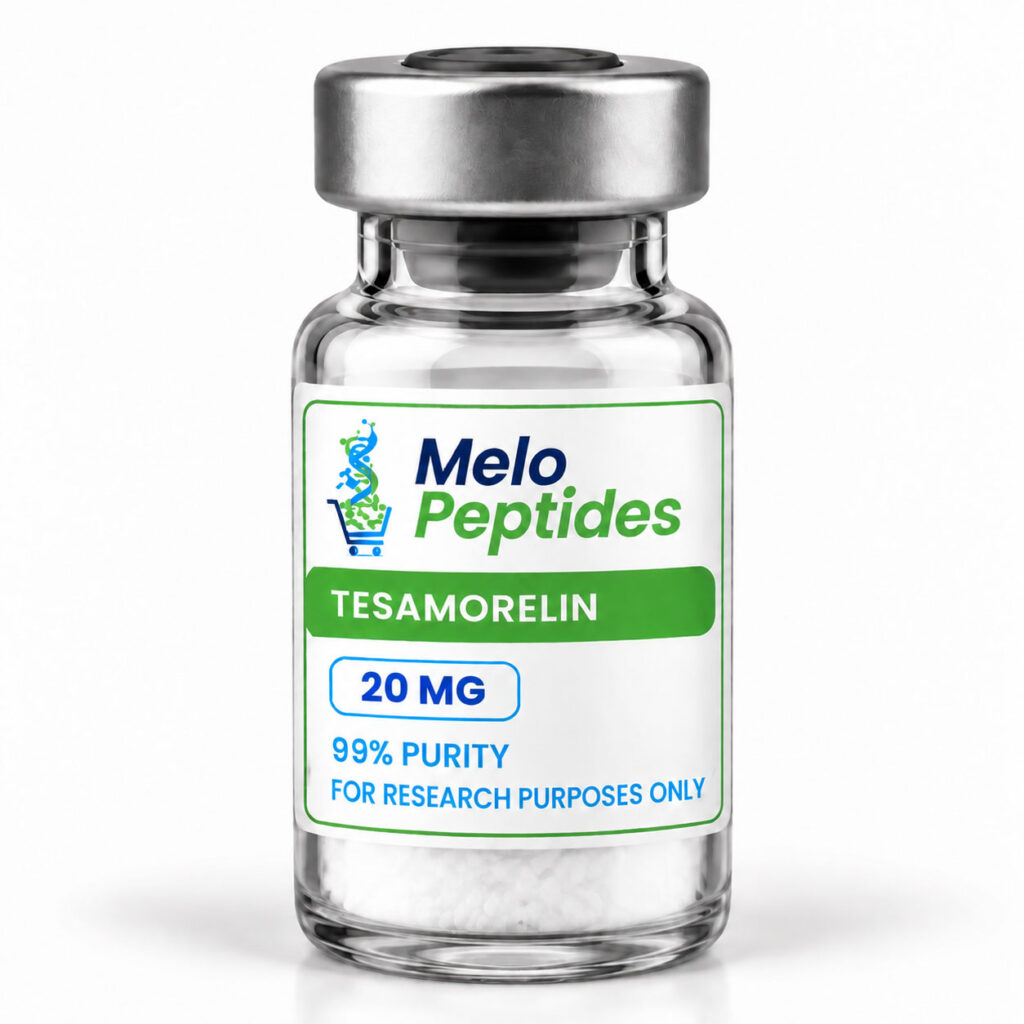
Tesamorelin 5 mg is a research format of tesamorelin, a stabilized synthetic analog of growth hormone–releasing hormone (GHRH) designed to stimulate endogenous growth hormone (GH) secretion through activation of pituitary GHRH receptors. Originally developed by Theratechnologies, tesamorelin has been extensively investigated in endocrine, metabolic, and body-composition research, particularly in studies involving the somatotropic GH–IGF-1 axis.
1. Stimulates Endogenous Growth Hormone Signaling
Tesamorelin binds to GHRH receptors located on pituitary somatotroph cells, activating intracellular signaling pathways associated with GH synthesis and secretion. This upstream mechanism provides a research model for examining endogenous GH regulation rather than directly administering recombinant growth hormone.
2. Investigates Pulsatile GH Secretion and Endocrine Regulation
Because tesamorelin acts through the GHRH pathway, researchers can investigate physiological patterns of GH secretion and hypothalamic–pituitary feedback mechanisms. Tesamorelin 5 mg may therefore be relevant to experimental studies examining hormone pulses, receptor responsiveness, and regulation of the somatotropic axis.
3. Supports Body-Composition Research
Growth hormone signaling is closely associated with lipid metabolism and adipose-tissue distribution. Tesamorelin has been studied extensively in relation to visceral adipose tissue and body-composition changes, making Tesamorelin 5 mg relevant to experimental research involving fat distribution and metabolic physiology.
4. Supports Lean-Mass and Muscle Metabolism Studies
Activation of the GH pathway can influence downstream IGF-1 signaling and processes associated with protein metabolism and tissue maintenance. Research involving Tesamorelin 5 mg may examine lean-mass dynamics, muscle metabolism, protein synthesis pathways, and related musculoskeletal processes.
5. Investigates Metabolic Health Markers
Changes in GH signaling can interact with lipid metabolism, glucose regulation, and energy utilization. Tesamorelin research therefore includes investigations into metabolic markers and the relationship between GH-axis activity, visceral adiposity, and broader cardiometabolic processes.
6. Features a Stabilized GHRH-Analog Structure
Tesamorelin incorporates structural characteristics intended to improve peptide stability and resistance to enzymatic degradation compared with native GHRH. This property makes it a useful research compound for investigating receptor engagement, peptide pharmacokinetics, and sustained modulation of the GH axis.
7. Provides a Model for Endogenous GH-Axis Modulation
Rather than directly supplying GH, tesamorelin acts upstream through the GHRH receptor pathway. This makes Tesamorelin 5 mg relevant to studies exploring pituitary signaling, endogenous hormone production, feedback regulation, and interactions within the broader endocrine system.
8. Relevant to Aging and Hormonal-Change Research
GH secretion generally changes with age, making the somatotropic axis an important subject in aging and endocrine research. Tesamorelin may be studied to better understand endogenous GH signaling, changes in body composition, metabolic regulation, and age-associated hormonal alterations.
9. Supports GH–IGF-1 Axis Research
Increased GH signaling can influence hepatic IGF-1 production, providing an important model for studying the relationship between pituitary GH secretion and downstream endocrine activity. Tesamorelin 5 mg may therefore be relevant to research involving GH–IGF-1 signaling, tissue metabolism, and endocrine feedback mechanisms.
10. Valuable Tool for Endocrine and Metabolic Research
Tesamorelin is used in research involving:
- Somatotropic axis regulation
- Endogenous GH secretion
- Visceral adipose tissue metabolism
- GH pulse dynamics
- GH–IGF-1 signaling
- Peptide stability and receptor kinetics
- Endocrine feedback mechanisms
- Body-composition research
- Metabolic physiology
Summary
In research contexts, Tesamorelin 5 mg provides a model for investigating endogenous growth hormone signaling, the GH–IGF-1 axis, visceral adipose tissue, body composition, and metabolic regulation. Its stabilized GHRH-analog structure and upstream mechanism make tesamorelin a significant compound for studying pituitary GH secretion, endocrine feedback, peptide pharmacology, and metabolic physiology.
Research-use note: Tesamorelin is an approved prescription medication for a specific medical indication in the United States, but the “5 mg” research format should not be interpreted as a recommended or established clinical dosage. Research information should not be considered medical advice or a substitute for guidance from a qualified healthcare professional.
Reviews
Clear filtersThere are no reviews yet.