




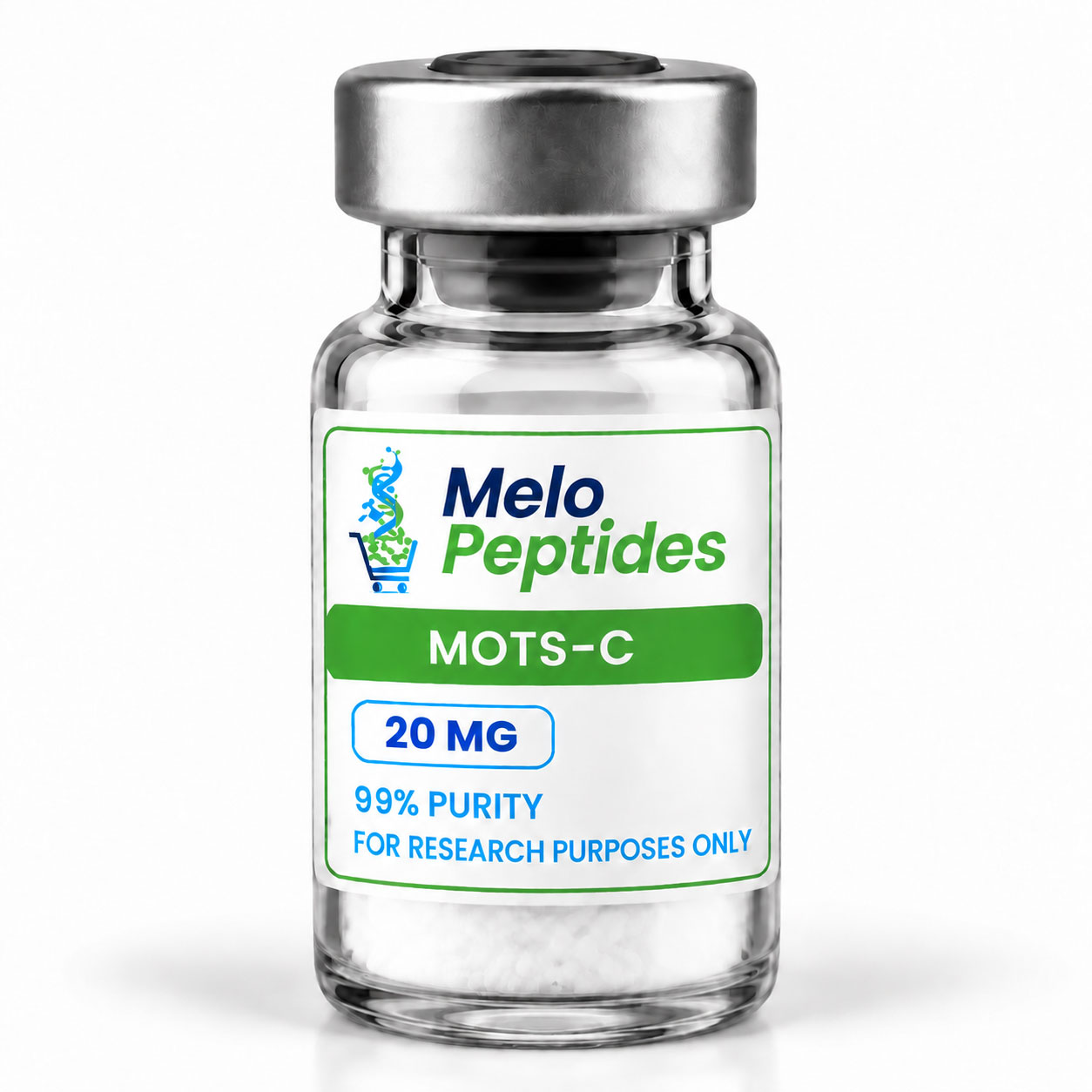
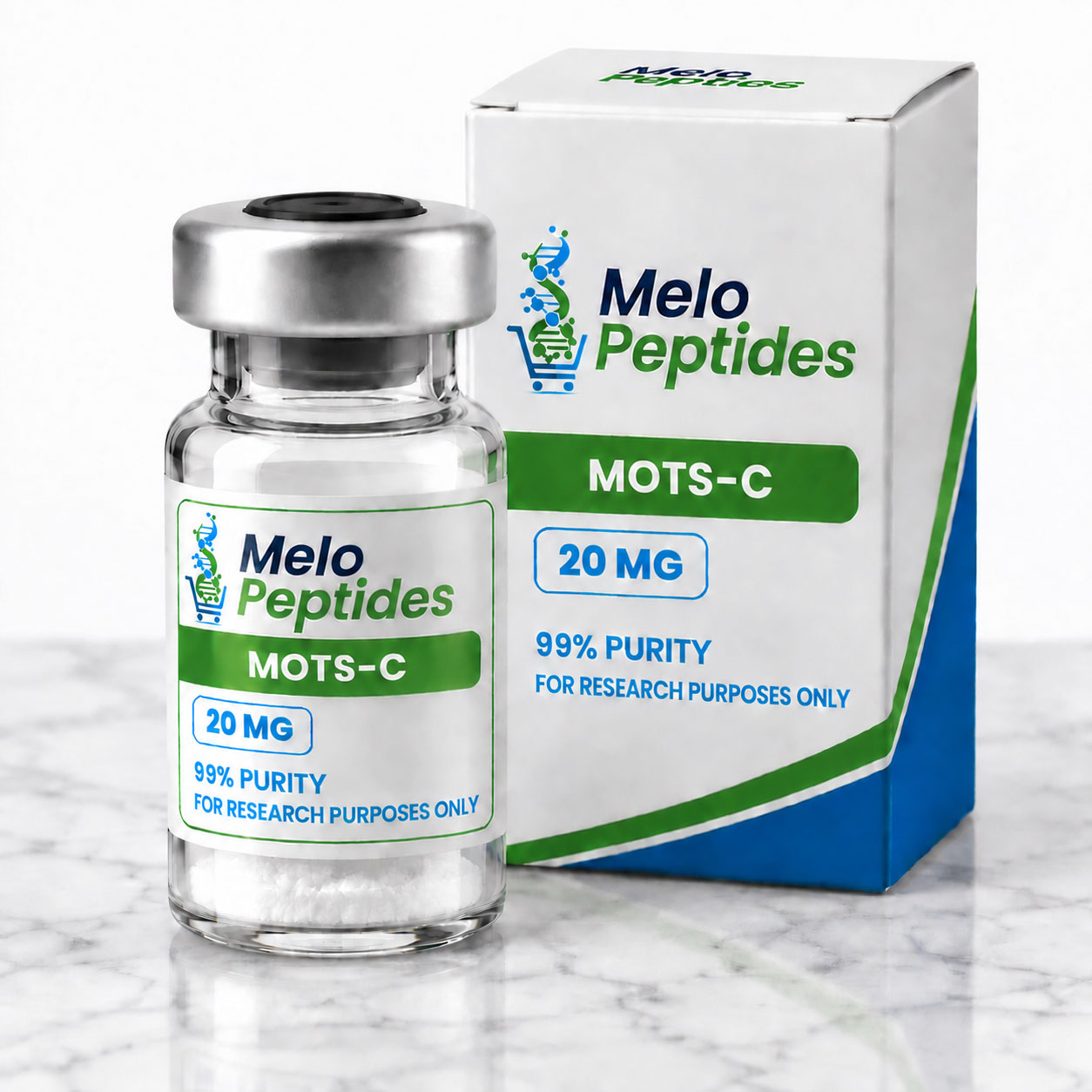



MOTS-c (Mitochondrial Open Reading Frame of the 12S rRNA-c) is a mitochondria-derived research peptide consisting of 16 amino acids and encoded by the mitochondrial genome. MOTS-C 20 mg represents a higher-strength research format used in discussions surrounding mitochondrial signaling, cellular metabolism, energy regulation, and stress-adaptation mechanisms.
1. Supports Cellular Energy Metabolism Research
MOTS-c is closely associated with cellular energy regulation and metabolic homeostasis. Preclinical research has linked MOTS-c activity with AMP-activated protein kinase (AMPK), a central cellular energy sensor involved in maintaining energy balance and responding to metabolic challenges.
2. Investigates Mitochondrial Function and Homeostasis
As a peptide originating from the mitochondria, MOTS-c provides a distinctive model for studying mitochondrial signaling and cellular energy management. Research involving MOTS-C 20 mg may explore mitochondrial homeostasis, energy production, and the ability of cells to adjust their metabolism under changing conditions.
3. Supports Metabolic Stress-Adaptation Studies
MOTS-c has been investigated in preclinical models involving metabolic stress, nutrient availability, and increased cellular energy demands. MOTS-C 20 mg may therefore be relevant to research examining cellular resilience, metabolic adaptation, and mechanisms involved in maintaining energy balance during physiological challenges.
4. Investigates Glucose and Lipid Metabolism
MOTS-c is studied in connection with AMPK-related signaling and downstream pathways involved in glucose utilization and lipid metabolism. These mechanisms make the peptide relevant to experimental research examining insulin-related signaling, substrate utilization, and broader metabolic regulation.
5. Relevant to Aging and Longevity Research
Mitochondrial performance and metabolic regulation are important areas of aging biology. MOTS-c has attracted interest in preclinical aging and longevity research investigating mitochondrial-derived signaling, age-associated metabolic changes, cellular stress responses, and mechanisms of metabolic resilience.
6. Supports Mitochondrial-to-Nuclear Signaling Research
A distinctive feature of MOTS-c is its reported ability to move into the nucleus under certain stress conditions. Researchers study this behavior to better understand mitochondrial-to-nuclear communication and potential changes in gene expression associated with metabolism and cellular stress responses.
7. Valuable for Exercise and Metabolic Adaptation Models
Because MOTS-c is associated with cellular energy regulation and metabolic adaptation, it has become an area of interest in experimental exercise research. MOTS-C 20 mg may be investigated in models examining exercise-related metabolic changes, energy utilization, endurance mechanisms, and cellular adaptation.
8. Important Tool for Metabolic Biology Research
MOTS-c provides researchers with a unique model for investigating mitochondria-derived signaling and its relationship with whole-cell metabolism. Research areas may include:
- Mitochondrial signaling
- AMPK-related metabolic pathways
- Cellular energy homeostasis
- Glucose and lipid metabolism
- Metabolic stress adaptation
- Mitochondrial–nuclear communication
- Aging and longevity biology
- Exercise-related metabolic adaptation
- Cellular resilience mechanisms
Summary
In research settings, MOTS-C 20 mg is relevant to investigations of mitochondrial signaling, cellular energy metabolism, AMPK-associated pathways, metabolic stress adaptation, and mitochondrial–nuclear communication. As a mitochondria-derived peptide, MOTS-c offers a distinctive research model for examining how mitochondrial signals can influence cellular metabolism and broader physiological processes.
Research-use note: MOTS-c remains an investigational research peptide and is not an approved medication for routine clinical use. The “20 mg” format should not be interpreted as an established or recommended clinical dosage. Research information is provided for informational and experimental purposes only and should not be considered medical advice or established treatment claims.


Reviews
Clear filtersThere are no reviews yet.