



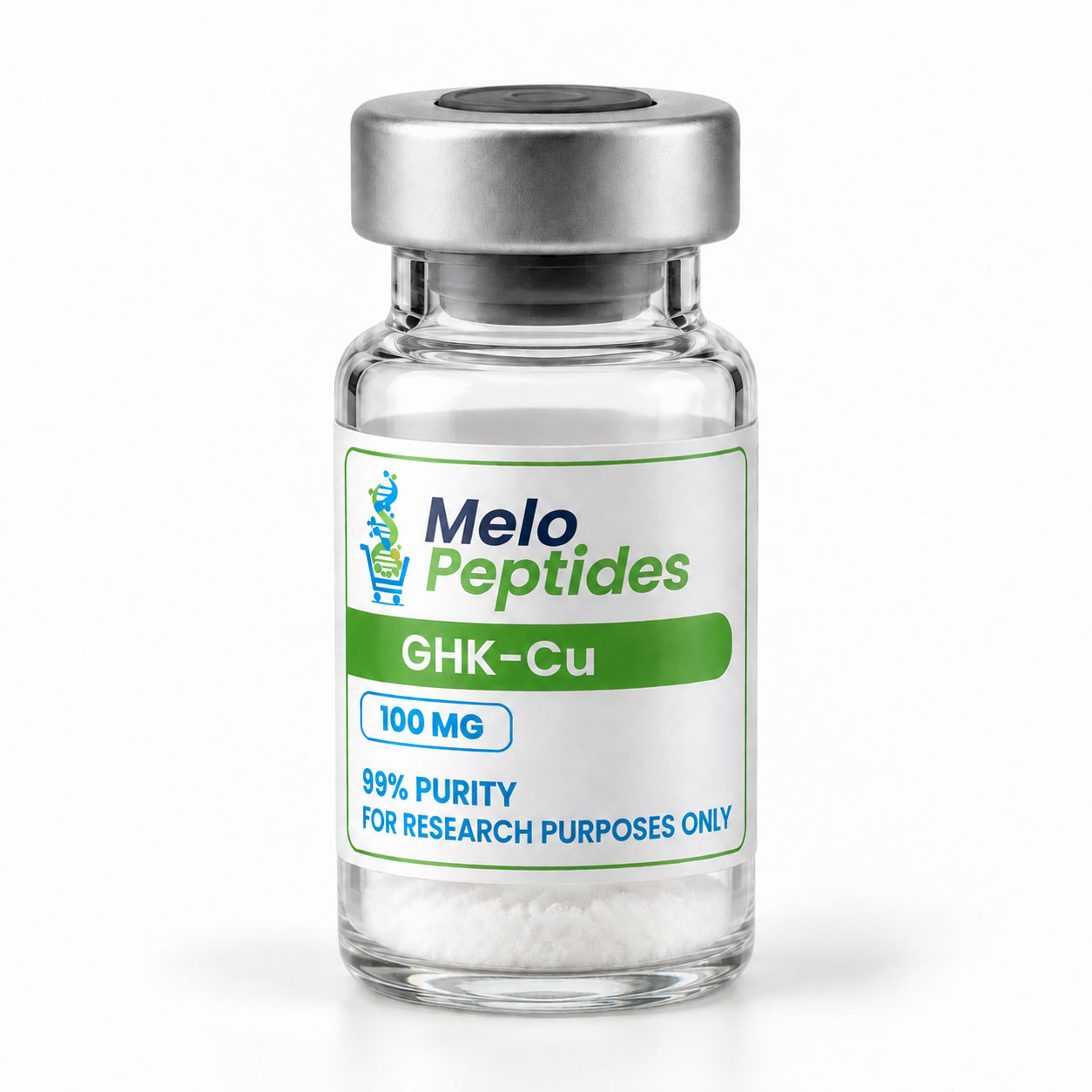
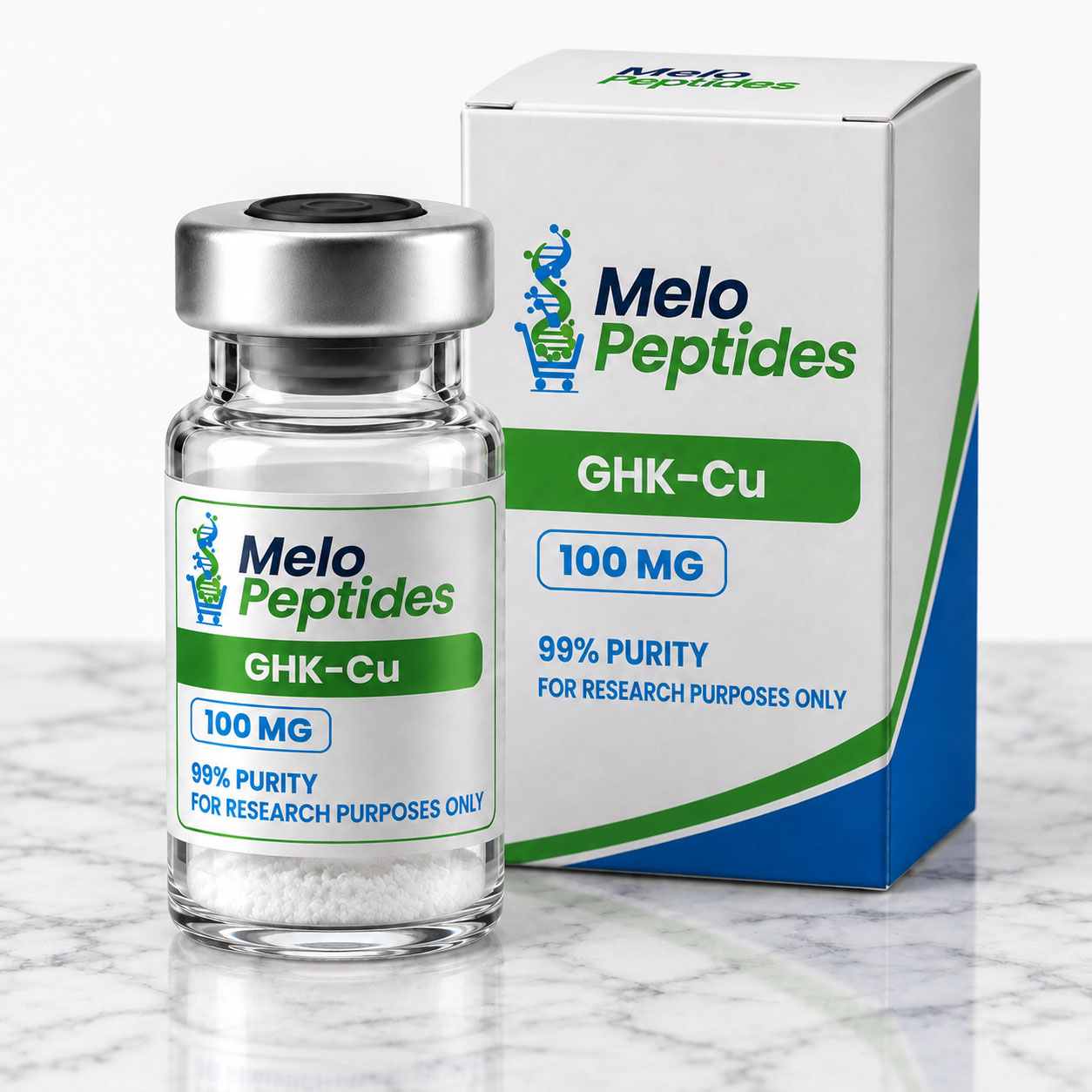

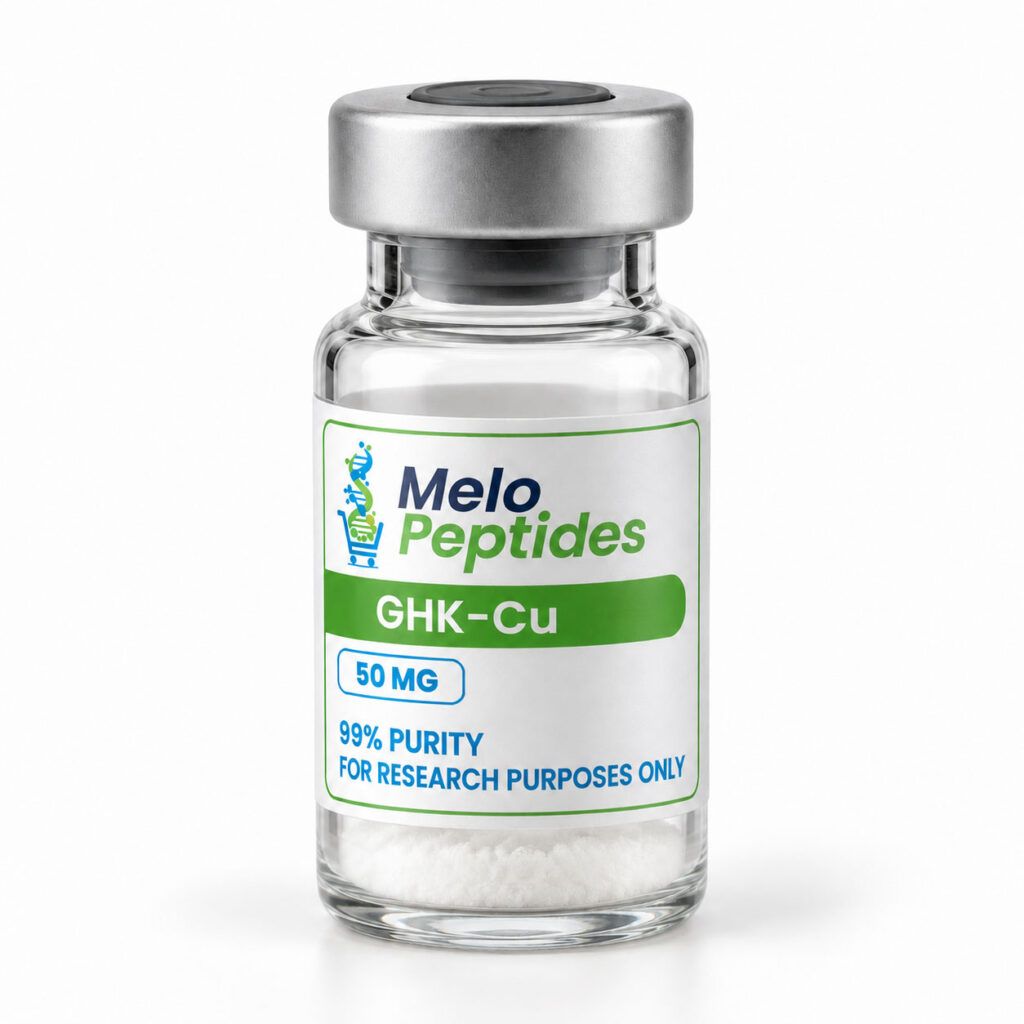
GHK-Cu (Copper Peptide) is a naturally occurring copper-binding tripeptide consisting of Glycyl-L-Histidyl-L-Lysine (GHK) complexed with copper (II) ions. It has been widely investigated in preclinical and laboratory research for its involvement in cellular signaling, extracellular matrix regulation, tissue remodeling, and regenerative biochemistry. GHK-Cu 100 mg refers to a higher-strength research format and should not be interpreted as an established clinical dosage.
1. Supports Collagen and Elastin Regulation
A major area of GHK-Cu research involves its interaction with collagen and elastin, two important structural proteins that contribute to tissue strength, flexibility, and integrity. Research models suggest that GHK-Cu may influence the balance between collagen production and degradation, making it relevant to investigations into skin structure, connective tissue biology, and extracellular matrix maintenance.
2. Promotes Tissue Remodeling and Repair
GHK-Cu has been studied for its potential role in cellular processes associated with tissue remodeling and repair. Research has examined its influence on cellular migration, organization, and extracellular matrix activity during regenerative processes. These characteristics make GHK-Cu a useful model compound in wound-healing and tissue-repair research.
3. Influences Gene Expression
Laboratory studies indicate that GHK-Cu may affect the expression of various genes involved in cellular growth, inflammatory signaling, tissue maintenance, and repair. This potential gene-modulating activity provides researchers with an opportunity to examine how copper peptides can influence cellular behavior and molecular signaling pathways.
4. Supports Antioxidant Defense Pathways
Copper is an essential component of several biological enzymes, including copper-dependent antioxidant systems such as superoxide dismutase (SOD). GHK-Cu has therefore been investigated in relation to antioxidant activity and cellular responses to oxidative stress. These mechanisms are particularly relevant to studies of cellular aging, environmental stress, and biological resilience.
5. Regulates Metalloproteins and Enzymatic Activity
GHK-Cu participates in research involving metalloproteins and metal-dependent enzymatic processes that contribute to extracellular matrix turnover and cellular metabolism. Its ability to interact with copper-dependent biochemical pathways makes it useful for investigating metal-peptide interactions, enzyme regulation, and redox-related cellular signaling.
6. Supports Angiogenic and Cellular Signaling Pathways
Research has explored whether GHK-Cu can influence signaling pathways associated with angiogenesis and tissue-level cellular communication. These pathways are important in laboratory investigations of vascular development, nutrient delivery, tissue remodeling, and regenerative biology.
7. Valuable in Skin and Hair Research Models
Because GHK-Cu has been studied in connection with collagen regulation, antioxidant pathways, and cellular signaling, it is frequently incorporated into skin and hair biology research models. Investigations may examine its relationship with extracellular matrix structure, hair follicle biology, tissue integrity, and structural changes associated with aging.
8. Important Tool in Regenerative Biochemistry Research
The biochemical characteristics and broad research profile of GHK-Cu make it a valuable peptide model for studying regenerative processes. Researchers investigate its potential interactions with extracellular matrix components, cellular signaling networks, tissue remodeling mechanisms, and copper-dependent biological pathways across different tissue models.
Summary
In laboratory and preclinical research, GHK-Cu is investigated for its potential involvement in collagen and elastin regulation, tissue remodeling, antioxidant defense, gene-expression pathways, and cellular communication. Its interaction with copper-dependent biochemical systems makes it a useful model compound for studying extracellular matrix dynamics and regenerative biology.
Research Use Note: GHK-Cu remains primarily a subject of laboratory and preclinical research for many of these applications. The 100 mg designation describes a research-format amount and should not be interpreted as a recommended human dosage or established therapeutic regimen. Research findings should not be treated as medical advice.
Reviews
Clear filtersThere are no reviews yet.