





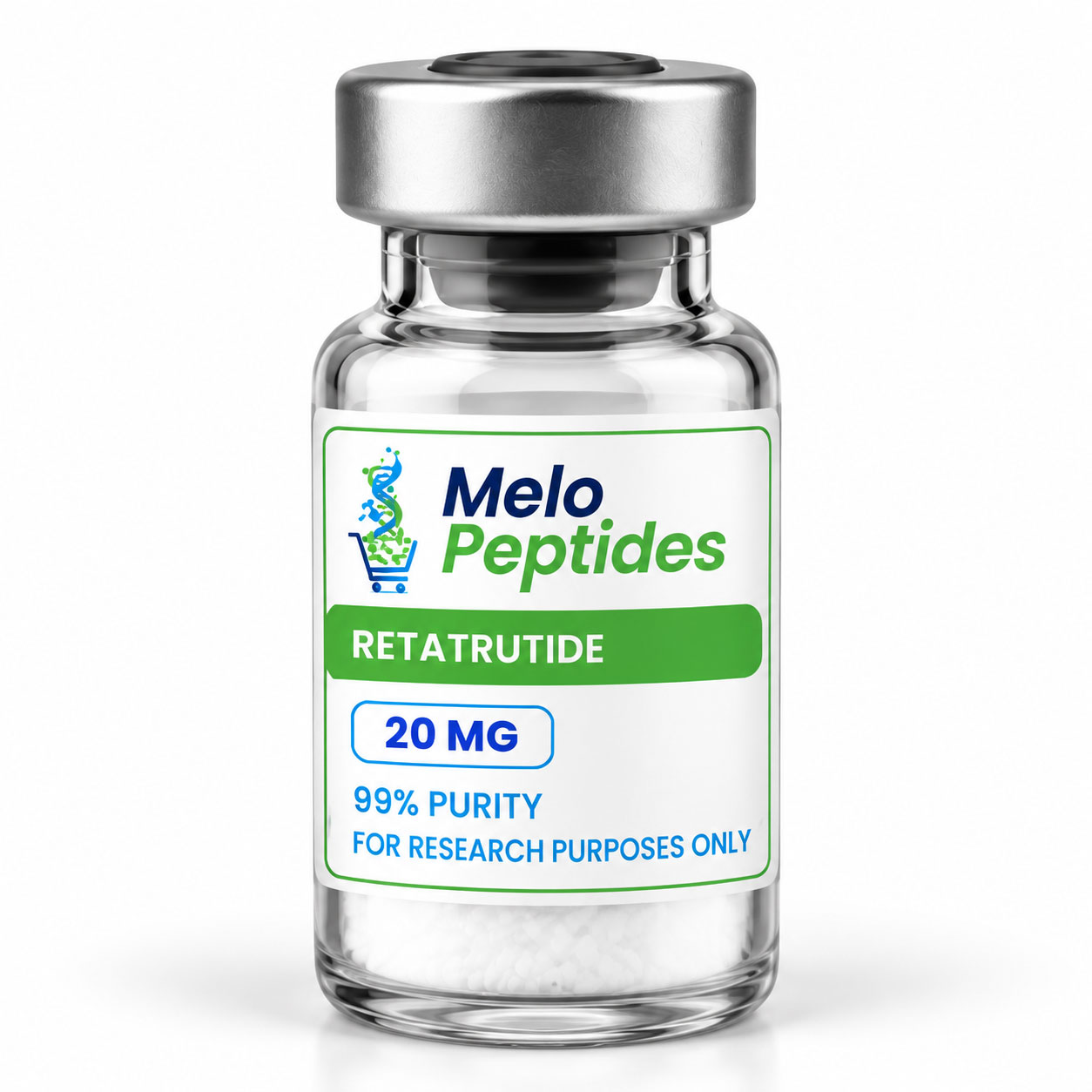
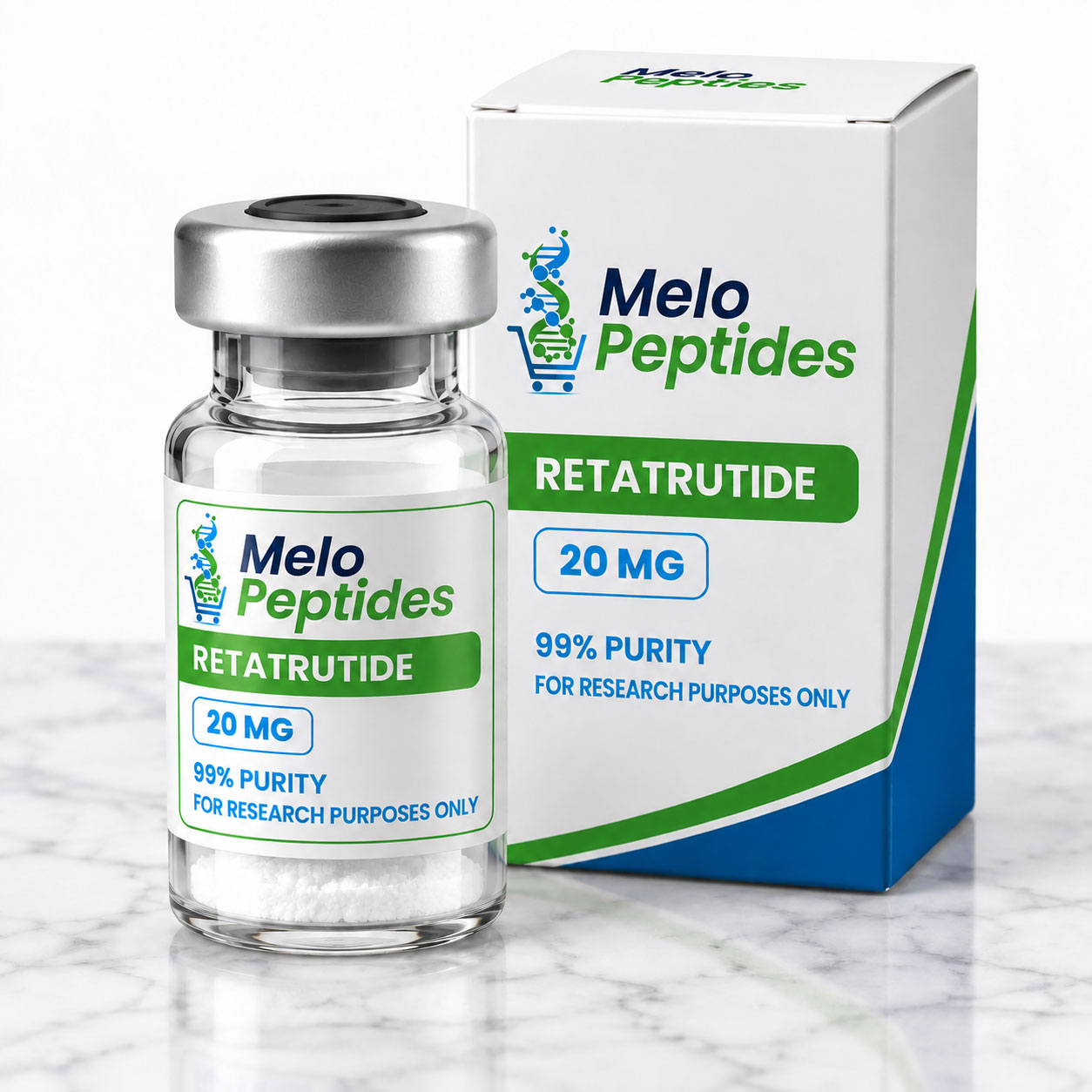


Retatrutide 20 mg is a higher-dose research format of retatrutide, an investigational triple-agonist peptide developed by Eli Lilly that simultaneously targets the GLP-1, GIP, and glucagon receptors. This dosage is commonly discussed in research contexts exploring more pronounced metabolic signaling, dose-response relationships, energy regulation, and coordinated activation of multiple metabolic pathways.
1. Supports Appetite Regulation and Satiety Research
Through GLP-1 and GIP receptor activation, Retatrutide 20 mg is studied for its effects on appetite-related signaling and satiety. Research models may examine changes in hunger signals, food intake, eating behavior, and energy balance at a higher exposure level.
2. Supports Glucose and Insulin Signaling Research
Retatrutide’s incretin activity makes it relevant to experimental research involving glucose-dependent insulin signaling and glucose homeostasis. The 20 mg format can be investigated in models examining insulin sensitivity, post-meal glucose regulation, and broader metabolic responses associated with increased pathway activation.
3. Activates Energy Expenditure Pathways
The glucagon component of retatrutide’s mechanism is an important area of metabolic research. Retatrutide 20 mg can be studied for its influence on energy expenditure, metabolic activity, thermogenic signaling, and substrate utilization within experimental models.
4. Encourages Research Into Fat Oxidation and Metabolic Flexibility
The combined GLP-1, GIP, and glucagon activity provides a framework for studying lipid metabolism and energy utilization. Retatrutide 20 mg may be investigated in models examining fat oxidation, substrate switching, and changes in metabolic flexibility over time.
5. Enables Integrated Multi-Pathway Metabolic Research
A defining characteristic of retatrutide is its triple-agonist mechanism. At the 20 mg research level, investigators can examine how simultaneous activation of GLP-1, GIP, and glucagon pathways may influence appetite, glucose metabolism, and energy expenditure as interconnected processes rather than isolated mechanisms.
6. Useful for Dose-Response Research
The 20 mg format can be relevant to studies investigating dose-dependent responses, receptor activation, signaling intensity, and metabolic adaptation. Researchers may compare different exposure levels to better understand how changes in dosage affect physiological and metabolic endpoints.
7. Supports Cardiometabolic Research Models
Appetite regulation, glucose metabolism, lipid utilization, and energy expenditure are interconnected areas of cardiometabolic research. Retatrutide 20 mg may therefore be incorporated into experimental models examining metabolic dysfunction, insulin-resistance pathways, lipid metabolism, and systemic energy regulation.
8. Relevant to Next-Generation Metabolic Peptide Research
Retatrutide is part of a newer generation of multi-receptor metabolic peptides being investigated for their coordinated effects across several signaling pathways. The 20 mg format may be useful for research involving:
- Advanced metabolic signaling responses
- Integrated GLP-1, GIP, and glucagon pathway activation
- Dose-response and receptor sensitivity studies
- Obesity and metabolic disease research models
- Energy expenditure and substrate utilization
- Future multi-pathway peptide research
Summary
In research settings, Retatrutide 20 mg is relevant to investigations of appetite-related signaling, glucose and insulin regulation, energy expenditure, lipid metabolism, and coordinated multi-pathway activity. Its GLP-1, GIP, and glucagon triple-agonist mechanism makes it a notable investigational compound for studying dose-dependent metabolic signaling and integrated energy-regulation pathways.
Research-use note: Retatrutide remains an investigational compound and is not an approved medication for routine clinical use. Research descriptions should not be interpreted as medical advice or established treatment claims.
Reviews
Clear filtersThere are no reviews yet.